

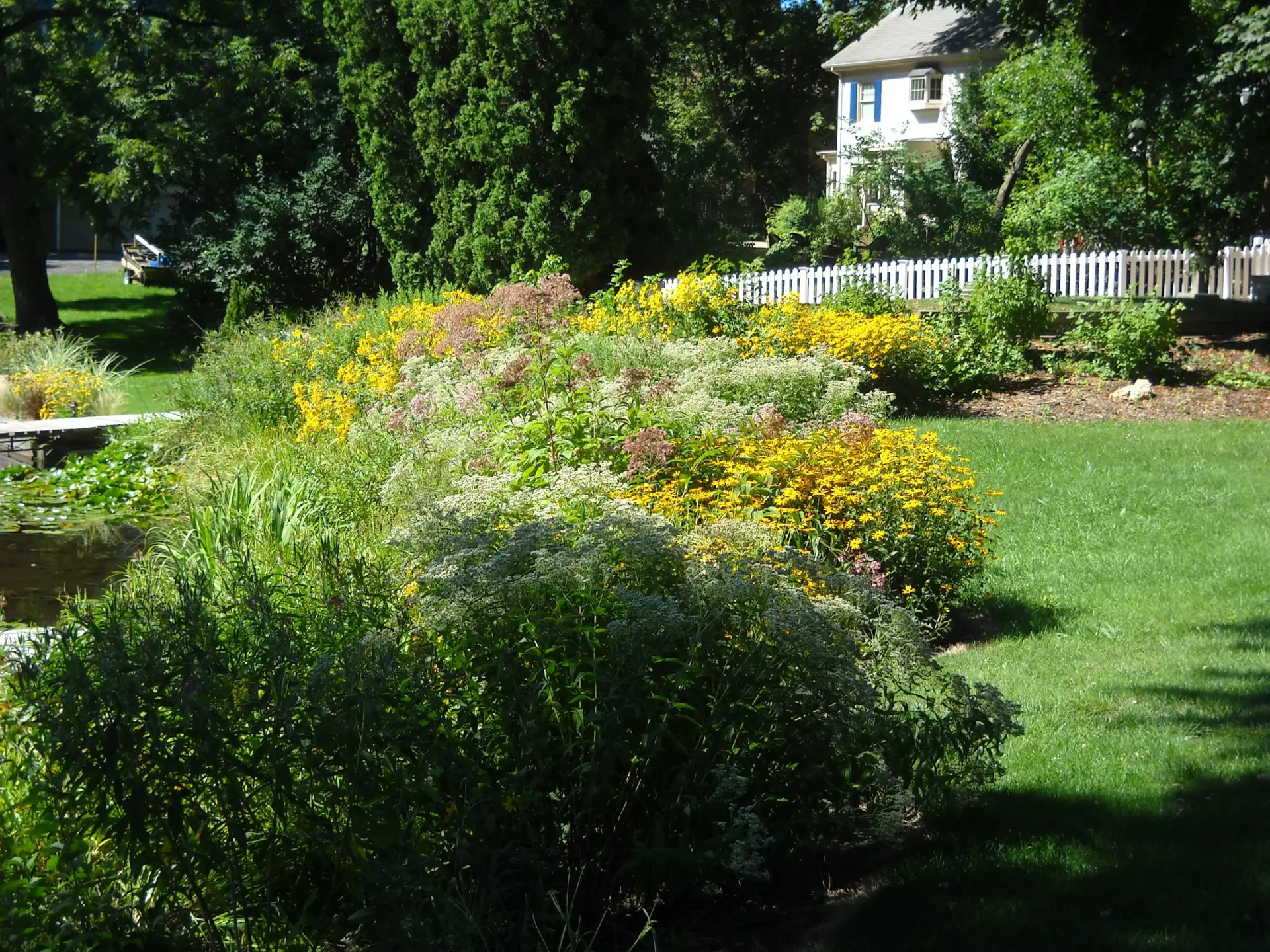
Natural shoreline features provide erosion control in various ways. Every shoreline is exposed to different natural events and human activities that can cause erosion. A small amount of soil erosion may not be a cause for any concern, but intervention may be needed on some shorelines. A permit may be required. Local land conservation department staff can provide technical assistance to landowners looking to restore their shoreland and prevent further erosion.
Resources & Publications
Wisconsin DNR Lake Shore Erosion Website
Wisconsin DNR Waterway and wetland permits: shoreline Website
Wisconsin Natural Resources Magazine: A delicate balance where land meets water
Many of the publications listed below are available at your local UW Extension Office or Land Conservation Department. They are also available at the UW Extension Learning Store for purchase.
A Fresh Look at Shoreland Restoration
A green lawn running down to the water’s edge allows 18 times more sediment and seven times more phosphorus to run into the water than a natural shore allows. A natural shore also hosts a multitude of wildlife, much of it tiny, all of it important to the health of the environment. The authors suggest ways for owners of lake property to create a natural shore buffer of native vegetation between land and water, a buffer which will display “a seasonal array of colors, textures, aromas, and wildlife activity.
Protecting and Restoring Shorelands
The authors describe how to begin restoring a shore to its native state, a task that requires taking into account the topography and soil of the site, the width of the shoreline band that must be restored in order to accomplish various goals, and what native plants are best used for restoration. A shore with native vegetation can provide wildlife habitat, flood control, shoreline stability, privacy, and a pleasing variety of objects to amuse the eye. It also can improve water quality as it filters sediment, nutrients, pesticides, and microbes from surface runoff.
The authors sketch the intricate interconnection between plants, animals, and water along Wisconsin shores. They discuss the grasses, flowers, and trees that can be planted to restore a shore to its native state, and they suggest ways to minimize the crushing effects of man on a multitude of nature’s creatures, including salamanders, muskrats, mayflies, frogs, turtles, bass, and bats.
Protecting Your Waterfront Investment: 10 Simple Shoreland Stewardship Practices
Healthy watersheds make healthy lakes and higher property values. Created for people who live on developed waterfront lots, this publication describes three major ways to protect your property investment.
The Water’s Edge: Helping Fish and Wildlife on Your Waterfront Property
This introduction to life at The Water’s Edge reveals the advantages of a natural, wildlife-friendly shore, and describes how you can restore, create, or maintain a natural shore without needing to give up your lawn and dock. In short, you can have your lawn, your dock, and wildlife too.
A Second Life for Trees in Lakes: As Useful in Water as They Were on Land
Woody debris in the water food, shelter, and breeding areas for many wildlife species including aquatic insects, frogs, turtles and a variety of fish species. This publication provides information on the benefits associated with leaving woody debris in lakes.
The Economics of Shoreland Protection
A growing body of research shows that waterfront property owners, local governments, economies and taxpayers benefit economically as a result of the amenities shoreland zoning preserves: clean water, wildlife, scenic beauty, and peace and quiet. Surveys of Wisconsin lakefront property owners and visitors consistently rate these as the amenities that attract them to the water. This publication summarizes these public and private benefits.
Wisconsin’s Healthy Lakes Program
Wisconsin’s Healthy Lakes Implementation Plan goal is to protect and improve the health of our lakes by increasing lakeshore property owner participation in habitat restoration and runoff and erosion control projects. The following frequently asked questions about funding and administering a Healthy Lakes project may help you get the answers you’re looking for.
Local Contacts:
Sauk County Conservation, Planning & Zoning Department
505 Broadway
Baraboo, WI 53913
608-355-3245
Columbia County Land & Water Conservation Department
120 West Conant St
Portage, WI 53901
608-742-9670


